Who We Are
The Board of Directors
-
Emily Van Dixhoorn serves as our Board Vice President. In addition to studying at Brown, Emily is a graduate of Westminster Theological Seminary. She is co-author of Gospel-Shaped Marriage: Grace for Sinners to Love Like Saints and author of Confessing the Faith Study Guide. Emily and her husband Chad live in Charlotte, NC with their five children.
-
Mark serves as Board Treasurer for Providence Hall, drawing on his experience in business and service at Sacred City Church in Providence.
-
Dr. Teri Elliott-Hart is the Associate Professor of Mentored Formation at Denver Seminary and serves as our Board President. She holds a PhD in Practical Theology from Boston College, a MEd in Teaching and Curriculum from Harvard University, and a BA in Education Studies from Brown University.
Elliott-Hart has served as the director of Leadership and Mentored Ministry Initiatives at Gordon Conwell Theological Seminary and has taught at several institutions including Boston Trinity Academy, Gordon Conwell, Harvard Divinity School, Boston College School of Theology and Ministry, and Azusa Pacific University School of Education and Behavioral Studies. In addition, she has served as the director of the Trinity Institute for Leadership and Social Justice, the department chair of Biblical Studies, and the remote learning coordinator at Boston Trinity Academy.
Elliott-Hart loves being a student and being a teacher and considers a posture of life-long learning to be essential for whole life discipleship. Research interests include educating for racial righteousness, consumer culture and the contemporary church, and youth leadership development in multi-cultural contexts.
-
Andy received his B.A. in Studio Art from Northwestern College and his Masters in Sculpture from Rhode Island School of Design (RISD). In addition to working full time at RISD, Andy is also a practicing artist and loves the outdoors, particularly taking groups up to the White mountains for backpacking trips. Andy and his wife Shannon have three kids and live in the Elmwood neighborhood of Providence.
-
Lisa serves as Board Secretary for Providence Hall and is the Director of the Branch Christian Christian Fellowship at Brown and RISD (Navigators). She works in cybersecurity for Fidelity.
-
Sam Schmitt is the Founding Director of Providence Hall and currently a Postdoctoral Research Associate at Brown University’s Center for Philosophy, Politics, and Economics. He lives in Providence, RI with his wife, Ann, and son, Teddy. Sam loves music, a long conversation, and a good cup of coffee. A message from Sam can be found below.
Other Supporters of Providence Hall
We’re fortunate to have the prayerful blessing of many people in the extended community of Providence, Brown, RISD, and the Christian community at large. This includes university professors, pastors, business leaders, entrepreneurs, artists, filmmakers, medical professionals, and church planters Protestant, Catholic, and Orthodox.
Advisory Committee
Paul Armstrong, Emeritus Professor of English and Former Dean of the College at Brown University
Jocelyn Bell, Assistant Professor of Politics, Law, and Society at Bryant University, Brown Alumna ’13 & ‘24
Nick Fawzi, Professor of Medical Science at Brown University
Travis Hutchinson, Pastor of Salt and Light Brown & RISD Christian Fellowship
Jarrod Lynn, Director of Athletes in Action at Brown University, Head of School at Providence Classical Academy, and Lay Elder at Godspeed Church, Brown Alumnus ‘05 & ‘07
Vivek Mathew, Executive Director of Chesterton House a Christian Study Center at Cornell University
Benjamin Storey, Codirector of the Center for the Future of the American University at the American Enterprise Institute
Jessica Hooten Wilson, Fletcher Jones Chair of Great Books at Pepperdine University
Darren Yau, Professor of Theology and Political Theory at Baylor University Honors College
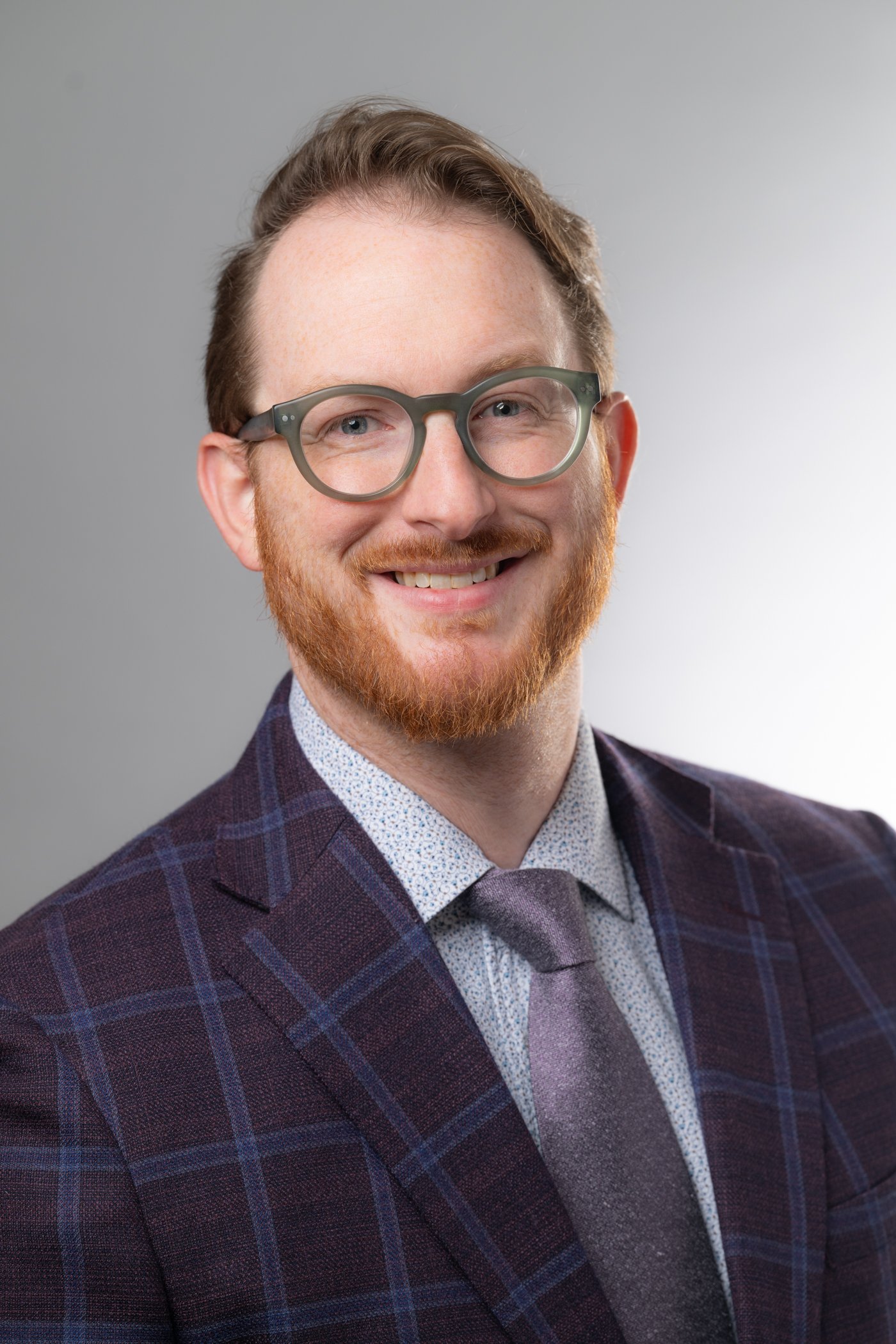
Founding Director Narrative and Vocation
Samuel B Schmitt, PhD, MA
My parents always took me to the church on the hill as a child. I admired the stained glass and became doubly attracted and afraid of the close quiet in the sanctuary after dark—the bare cross, the altar, empty pews, and stowed hymnals. Christmas pageants, first communion, scripture readings, and confirmation came. While I soon left the church, that bare cross and darkened sanctuary followed me like a rumor. Around fifteen I left the church because of a general lack, real or perceived, of intellectual and spiritual depth amongst Christians. Christians seemed to me to be more shaped by politics, petty differences, and popular morality than by an abiding commitment and formative relationship with Jesus. In short, they did not seem much different than non-Christians except that they carried the additional liability of hypocrisy. My born-again conversion in college came through thousands of hours of conversation with campus ministers, fellow students, independent study, reflection, and prayer. Through the following years in ministry and academia, I formed a pattern of life integrating contemplation, scholarship, teaching, community, and public life into a single vocation I believe fits neatly within Providence Hall. It took some time to get here.
In college, I encountered Christians who took Jesus, the scriptures, and the challenge of seeking life after the fall seriously; it was no longer possible to dismiss Christianity as before. I began to drink deeply of the well of Christian thought and engage with a community of believers while simultaneously trying out the wisdom of the world. I read the Gospels, CS Lewis, Alvin Plantinga, JL Mackie, Dallas Willard, Nietzsche, Kant, Locke, Auden, Aristotle, Plato, and Lincoln. I founded the Secular Society on my campus and organized parties at downtown bars. I attended Bible studies and befriended ministers while wondering why God remained hidden from me. I participated in a civic leadership program including repeated collaborative challenges, interactions with Christians, and cause for reflection on the place of faith in public life. I sat with pastors and pressed them on the tension between justice and forgiveness while seeking their insight on how to live the Good Life—and they pressed me on the incongruities of my life and mind. I ached for God through Bill Evans’ solo works, Wagner’s Pilgrim’s Chorus, corn fields and bonfires, Wyeth’s Christina’s World, Central Park, stained glass and hammer-beamed roofs, fresh snow, Coltrane’s Naima, Bach’s Goldberg Variations, and the river’s bend. The welcome, wisdom, and wonder of the Christian tradition—and the truth of the gospels—began to take hold.
In time, the person of Jesus, the arc of scripture over creation, fall, redemption, and restoration, the persistence of the Father, move of the Holy Spirit, the living testament of the church, and the evidence of God in all things made Christianity increasingly plausible, respectable, and desirable. God continually placed people, books, music, art, and experiences in my path which made His presence, wisdom, and sovereignty known. Ultimately, I was made alive in Christ in October of 2012.
Lacking a better description, I sometimes jokingly refer to myself as an “evangelical mutt with elbow patches.” The past decade of my career has been characterized by a complex interaction between ministry and academia. After my conversion and baptism in college, I worked for a medium-sized campus congregation (EFCA) and volunteered for Cru before and during graduate school in Ohio. While pursuing my PhD, I served on the elder board and preaching team at a congregation in Chapel Hill, NC (Wesleyan Church). These ministry opportunities allowed me time to soak up campus ministry, lead reading groups, teach apologetics, preach, advise the pastorate, sit with and counsel the doubts of a deconstructionist age, reflect on evangelicals and exvangelicalism, listen to Christians from my left and right, and see friends fall from the faith while others grew like oaks of righteousness. At the same time, I was going deeper and deeper into my academic work. In all, I have taught undergraduate courses, taken graduate courses, convened seminars, and researched topics in philosophy of religion, the problem of evil and suffering, free will, the purpose of the university, the American Professoriate, apologetics, the ethics of peace and war, Christianity and capitalism, political theology, environmentalism, civic theory and leadership, contemporary and historical economic thought, contractarianism, classical and modern political theory, conservatism, egalitarianism, contemporary political philosophy, American politics, the American Founding Era, the First Amendment, constitutional law, American political thought, property and the rule of law, and public policy. In other words, I have been steeped in the academic study of questions surrounding philosophy, politics, economics, and religion while leading in several ministry capacities.
When I became extensively involved with the Christian Study Center at UNC-Chapel Hill, the NC Study Center, these parallel vocations, ministry and academia, came to a head. There, I saw students with a hunger for rich understanding of God, camaraderie, good food, and depth of purpose in higher education come together under a single roof to pray, read, study, and celebrate—all while remaining an integral part of UNC Chapel Hill’s secular campus. It became a place for students to get an excellent Christian education while enrolled at a world-class secular institution. The NC Study Center became my second office in graduate school (I was often mistaken as an employee). I deepened graduate student involvement, piloted an Advanced Topics in Christian Thought series, mentored undergraduates, led seminars, and shadowed the NC Study Center’s Founding Director, Madison Perry, all in service of creating spaces for deep Christian learning, reflection on vocation, and public life. Leaving Chapel Hill for a postdoc at Brown’s Center for Philosophy, Politics, and Economics, I hoped that I might someday serve another Christian Study Center.
Upon taking the post at Brown University, I carried out my normal academic work to my satisfaction. However, God was at work in an unforeseen way. Prompted by a sermon on the importance of following God’s call and pursuing His opportunities despite what may seem rational to the world, I began to pray for the possibility of a Christian Study Center in Providence.
It is an awful thing to wonder at the plan of God. Once one considers what He may ask of you, knowing what His Son took up, what His people endured and still endure, it is fearful to hold to the church. I am, therefore, always skeptical that I should have the blessing to be called to something like Providence Hall. Could God be so good as to set this work for me? The work is so appealing that I am apt to forget what I am giving up—the potential prestige of Professorship, the security of lifetime employment if I should get a Tenure Track job. Yet, looking back on the years of my conversion, infancy in faith, growing maturity and leadership in scholarship and teaching, and increasing involvement in both local churches and the NC Study Center, I have begun to see that God has prepared me to pursue the work of establishing and directing a Christian Study Center in Providence, Rhode Island. He has, in short, formed a pattern of life for me integrating academia and ministry through contemplation, scholarship, teaching, community, hospitality, and public life.
Founding Providence Hall is, therefore, a continuation of many years of study and experience in the Christian life of the mind, the complexities of Christian citizenship, and the hospitality and care of ministering to those seeking answers to the hardest questions of meaning and action in a fallen world. It is only through the blessing and commission of brothers and sisters in Christ that I pursue it and only by God’s grace that it may be accomplished in any measure.
In Christ,
Sam Schmitt